As the effects of a hotter planet rack up more damages and health issues for people in exposed regions, the conversation around climate change is shifting from how to curb it to how to adapt to it.
A new report that rated adaptation tools around the world found the most effective ones are surprisingly simple, including fans and sea dikes — mounds that can be made out of stone or dirt.
“These are technologies that the world has been deploying for centuries or millennia,” said Mekala Krishnan, a partner at McKinsey Global Institute who co-authored the report. “We’ve been doing this for a while, so that’s the good news.”
The study, which includes solutions for extreme heat, flooding, wildfires and droughts, adds to the growing conversation around adaptation.

Billionaire philanthropist Bill Gates recently called for the world to “pivot” towards funding adaptation methods, and his foundation announced in November that it will commit $1.4 billion to expand access to innovations that help farmers in Africa and Asia become more resilient. And this year’s United Nations annual climate summit ended with a new agreement to triple financing for adaptation measures to $120 billion per year by 2035.
But more research needs to go into adaptation, which has been far less studied than emission-cutting technologies, Krishnan said. The McKinsey report mapped 20 tools that help communities withstand the effects of climate change, comparing the tools’ average cost and their effectiveness at reducing damage.
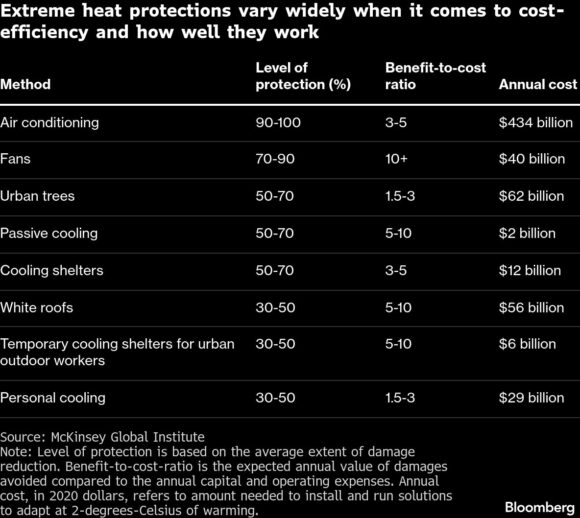
For example, the researchers found that fans aren’t sufficient in the hottest regions but still reduce heat risk and are far cheaper to install and run than air conditioners. Planting trees in cities, by contrast, is less cost-effective and offers less protection than fans or AC.
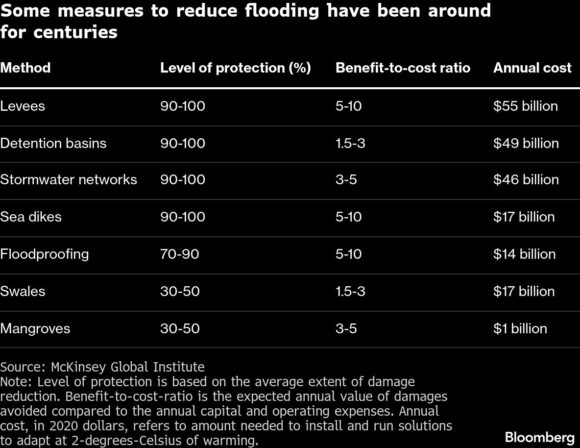
When it comes to flood protection, the benefits of sea dikes and levees outweigh their costs by five to 10 times and are 90% to 100% effective at reducing flood damages. Of the two, sea dikes are a lot cheaper to build and maintain.
Detention basins — a constructed depression that stores stormwater runoff — are just as protective as sea dikes and levees, but they are less cost efficient.
This kind of comparison helps show that adaptation is often a good investment for affected areas, especially those most vulnerable to climate change, which are generally among the poorest regions in the world, according to Krishnan.
More than 90% of people in US areas exposed to heat stress have access to air conditioning. In sub-Saharan Africa and developing parts of Asia, the share is about 3% and 11%, respectively.
Even if some of these solutions are relatively cheap, they remain out of reach for many communities, Krishnan said. The world currently spends $190 billion annually to protect 1.2 billion people from extreme weather, but it would cost $540 billion to provide that level of protection for all 4.1 billion people living in places exposed to climate hazards, according to the study.
“About 4 billion people live in places today that experience heat, wildfire, drought and flooding,” Krishnan said. “But only about a billion are protected with one of these 20 measures that we examined in this research.”
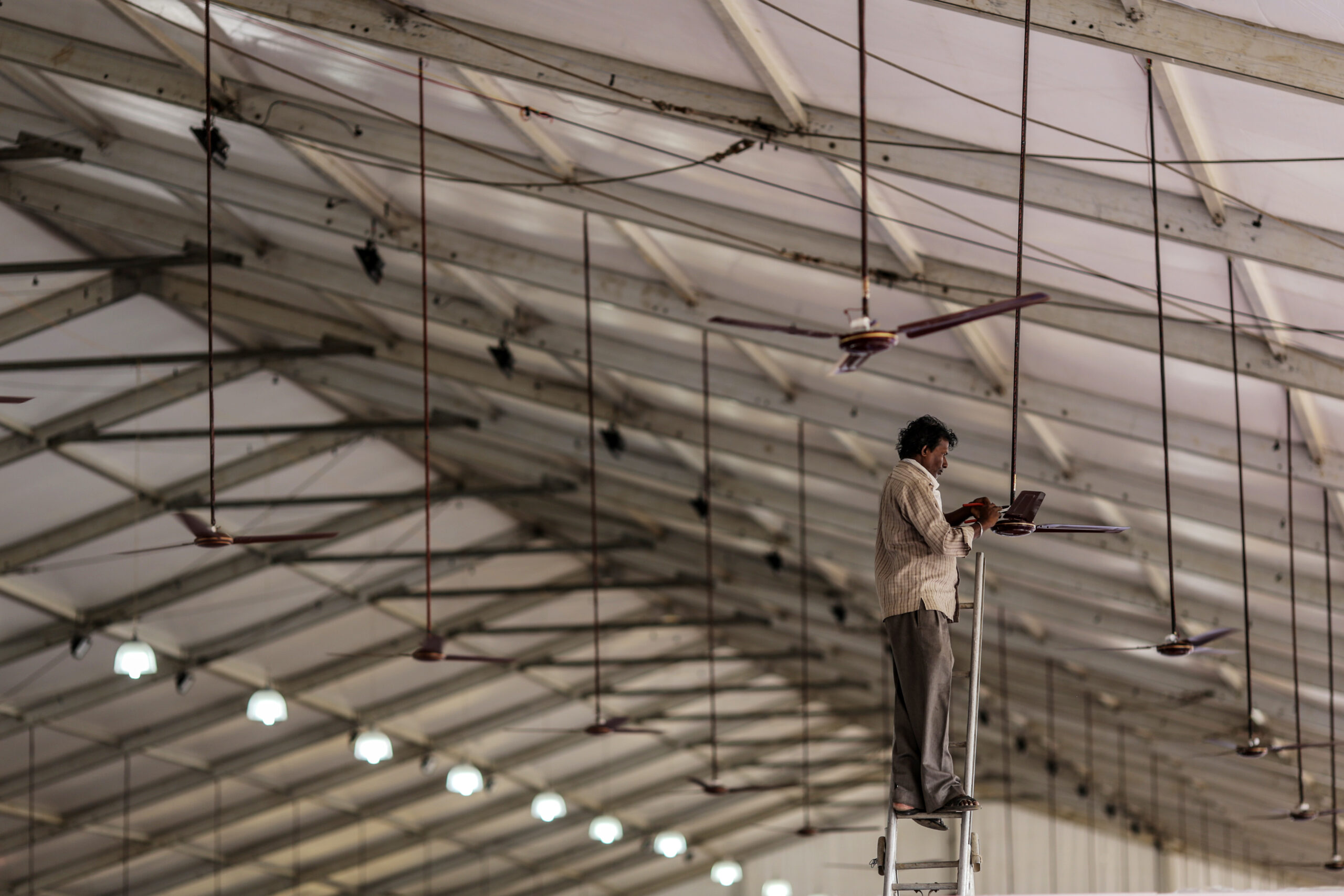
Photograph: An electrician installs a ceiling fan in Mumbai, India; Photo credit: Dhiraj Singh/Bloomberg
Copyright 2025 Bloomberg.
The most important insurance news,in your inbox every business day.
Get the insurance industry’s trusted newsletter